Solid Phase Peptide Synthesis: Protocol and Troubleshooting
Discover the advantages of solid phase peptide synthesis and learn effective protocols and troubleshooting tips for consistent peptide production.
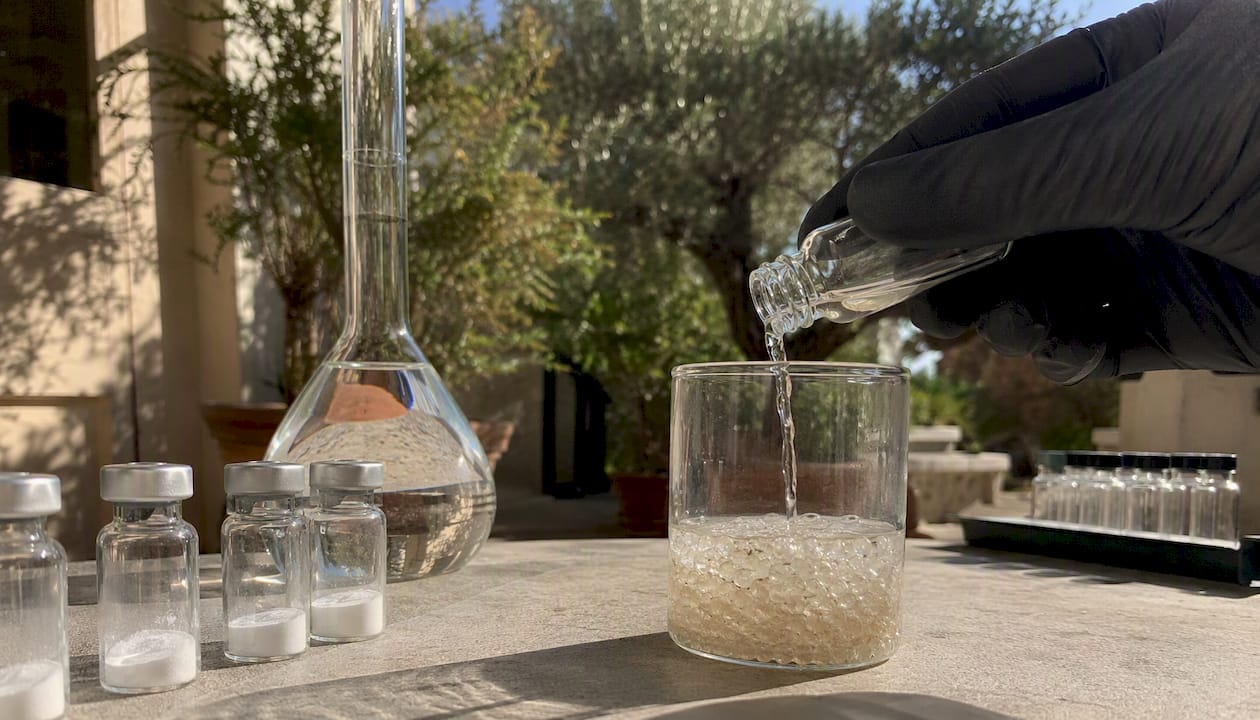
Solid phase peptide synthesis is a resin-bound, stepwise method that builds a peptide chain from its C-terminus to its N-terminus, one amino acid at a time, using repeated cycles of deprotection and coupling. Fmoc/tBu chemistry is the default protection strategy in most modern labs, and it’s the right call whenever you need short-to-medium peptides fast, with the flexibility to automate the process or iterate on a sequence without redesigning your whole workflow.
Choose solid phase peptide synthesis (SPPS) over solution-phase or recombinant methods when your project looks like one of these:
- You need a research-grade peptide standard for assay calibration or method validation, where lot-to-lot consistency matters more than raw scale.
- You’re running structure-function studies and need to swap residues, truncate sequences, or add non-natural amino acids quickly.
- You want a platform that scales from a single manual reaction vessel to an automated synthesizer without changing your core chemistry.
Key Takeaways
Solid phase peptide synthesis succeeds when resin choice, protection strategy, coupling efficiency, and analytical verification are all matched to the target sequence rather than defaulted to a one-size-fits-all protocol.
| Point | Details |
|---|---|
| Match resin to C-terminus | Choose Wang for a free acid, Rink amide for a C-terminal amide, and chlorotrityl for mild-cleavage fragment work. |
| Protect coupling efficiency early | Cumulative yield drops fast at lower per-step efficiency, so monitor every coupling rather than assuming success. |
| Default to Fmoc chemistry | Fmoc/tBu avoids anhydrous HF and enables real-time UV monitoring that Boc chemistry can’t match. |
| Troubleshoot aggregation first | Pseudoproline or depsipeptide insertion targets the most common cause of failed couplings in difficult sequences. |
| Verify before you trust a lot | Confirm identity by mass spectrometry and purity by RP-HPLC, and check that the COA is lot-specific, not generic. |
Run a small test cleavage and full analytical check before scaling any new sequence to production volume, and treat solvent and reagent waste reduction as a standing priority alongside every safety protocol on the bench.
Table of Contents
- What Is Solid Phase Peptide Synthesis and Why Labs Rely On It
- The General SPPS Cycle Step by Step
- Fmoc Versus Boc: Choosing a Protecting Group Strategy
- Picking a Resin and Linker for the Right C-Terminus
- Coupling Reagents and Activation Strategies
- Confirming Coupling Success: Kaiser Test and Beyond
- Cleavage and Global Deprotection
- From Crude Peptide to Verified Product
- Why Some Sequences Fight Back: Troubleshooting Difficult Peptides
- Manual Synthesis, Automated Synthesizers, and Scale-Up
- Safety, Waste, and Greener SPPS Practices
- A Brief History and the Protocols Worth Citing
- What a Legitimate Lot COA Should Tell You
- Frequently Asked Questions
- Sources
What Is Solid Phase Peptide Synthesis and Why Labs Rely On It
The method works because the growing peptide chain stays covalently anchored to an insoluble polymer resin bead throughout synthesis. That single design choice is what makes SPPS so much faster to work with than classical solution-phase synthesis. Instead of extracting and purifying an intermediate after every single coupling step, you filter and wash the resin. Excess reagents, byproducts, and spent activators simply rinse away in seconds, and the peptide stays put.
Before any chemistry happens, the resin has to swell. Dry resin beads are tightly packed polymer networks, and a solvent like dimethylformamide (DMF) or N-methylpyrrolidone (NMP) needs to penetrate and expand that matrix so reagents can actually reach the reactive sites inside the bead, not just on its surface. A poorly swollen resin behaves like a closed door: your coupling reagents bounce off the outside while the ester or amide linkage sits unreached in the interior.
Once swollen, the resin carries a linker and, usually, the first amino acid pre-loaded at defined substitution. From there, Merrifield’s original solid support concept plays out in cycles: remove the temporary N-terminal protecting group, couple the next protected amino acid, wash, and repeat until the sequence is complete.
The advantages compound as sequences get longer. Because every step is a wash-and-filter operation, SPPS is naturally suited to automation, and synthesizers can run unattended overnight cycles that would take a chemist days to do by hand at the bench. The tradeoff is real, though: each coupling step that isn’t 100% efficient leaves behind a small population of deletion and truncation sequences that accumulate as chain length grows, and that impurity burden is the single biggest factor separating an easy synthesis from a difficult one.
The General SPPS Cycle Step by Step
A standard SPPS cycle follows the same core sequence whether you’re running it by hand at a fritted syringe or on a fully automated instrument. Here’s the practical order of operations:
- Swell the resin in DMF or NMP for 20 to 30 minutes to open the polymer matrix before any chemistry begins.
- Confirm or establish initial loading, typically via a resin-bound linker with a known substitution value in mmol/g.
- Deprotect the N-terminus. For Fmoc chemistry, this usually means 20% piperidine in DMF, a base-mediated elimination that strips the protecting group in minutes.
- Wash thoroughly, generally five to six times with DMF, to clear residual base and the dibenzofulvene-piperidine adduct byproduct.
- Activate and couple the next protected amino acid, using an excess of two to ten equivalents relative to resin loading, depending on the difficulty of the coupling.
- Wash again to remove unreacted activator, excess amino acid, and coupling byproducts.
- Cap unreacted amine groups (optional), typically with acetic anhydride, to prevent deletion sequences from continuing to elongate.
- Repeat steps 3 through 7 for each residue in the sequence, working from C-terminus to N-terminus.
Stoichiometry matters enormously here, and the math is unforgiving. Cumulative coupling efficiency across a sequence has an exponential effect on final crude yield: a 26-residue peptide synthesized at 99% efficiency per step lands around 77% crude yield, but drop that per-step efficiency to just 95%, and the same 26-mer craters to roughly 25% crude yield. That’s why researchers routinely push amino acid excess up for longer or harder sequences rather than accept marginal coupling yields early and hope they average out.
Timing varies by step and by automation level. Manual deprotection typically runs 5 to 20 minutes depending on resin loading and steric bulk near the growing chain. Coupling times range from 30 minutes for straightforward residues to several hours for sterically hindered ones like valine or isoleucine following another bulky residue. A quick safety note before you get deep into a synthesis: piperidine, TFA, and most scavenger cocktails are corrosive and require fume hood work, proper PPE, and a clear disposal plan, not casual bench handling.
Fmoc Versus Boc: Choosing a Protecting Group Strategy
Fmoc/tBu chemistry is base-labile: piperidine removes the Fmoc group through an elimination mechanism, while side-chain protecting groups (tBu-based, generally) stay intact until a separate acidic cleavage step at the end. Boc/Bzl chemistry works the opposite way. Boc comes off with mild acid (typically TFA in DCM) at every cycle, while the benzyl-type side-chain groups need strong anhydrous HF for final removal.
That difference in cleavage chemistry is the whole ballgame. Fmoc synthesis lets you monitor deprotection by UV absorbance of the dibenzofulvene-piperidine adduct at 301 nm, giving you a fast, quantitative readout of how much resin-bound amine was just freed. Boc synthesis has no equivalent built-in monitoring step, and it requires HF apparatus, which most academic and CRO labs have phased out in favor of Fmoc for that reason alone.
| Factor | Fmoc/tBu | Boc/Bzl |
|---|---|---|
| Deprotection reagent | Piperidine (base) | TFA (mild acid) |
| Final cleavage | TFA cocktail | Anhydrous HF |
| Orthogonality | Base labile N-protection, acid labile side chains | Acid labile at both stages, requires careful control |
| Real-time monitoring | UV at 301 nm during deprotection | No routine UV monitoring |
| Typical use case | Default for most modern synthesis | Specialized sequences resistant to TFA-mediated side reactions |
A few practical notes worth keeping in mind:
- Fmoc is the default choice for the overwhelming majority of research labs because it avoids anhydrous HF entirely.
- Boc still has a niche for certain difficult sequences, or where TFA-sensitive side reactions push researchers toward the older chemistry.
- Whichever strategy you pick, side-chain protecting groups have to survive every repeat deprotection cycle of the main chemistry, which is why orthogonality between the temporary and permanent protecting groups is non-negotiable.
Picking a Resin and Linker for the Right C-Terminus
Resin choice decides your peptide’s C-terminal chemistry before you’ve coupled a single residue, so it’s worth getting right at the planning stage rather than discovering the mismatch after cleavage.
- Wang resin is a classic acid-labile linker that releases a free carboxylic acid at the C-terminus upon TFA cleavage, useful when your target peptide is a native acid.
- Rink amide resin cleaves to give a C-terminal amide, which is the common choice when the natural or intended peptide terminates in -CONH2 rather than -COOH.
- 2-Chlorotrityl chloride resin is prized for its extremely mild cleavage conditions (as little as 1% TFA in DCM, or even acetic acid/TFE mixtures), which makes it the go-to support when you need to preserve acid-sensitive side-chain protecting groups for downstream fragment condensation.
Swelling solvent choice interacts with resin type in ways that matter for reaction kinetics. DMF and NMP are the workhorses for polystyrene-based resins, while some PEG-based or ChemMatrix-type supports swell better in more polar or aqueous-tolerant solvents, an increasingly relevant point as labs look for greener alternatives to traditional DMF. Whatever the resin, poor swelling shows up downstream as sluggish, incomplete couplings that look like a reagent problem but are actually a mass-transport problem.
Once your first residue is attached, run a Fmoc UV loading test: cleave a small, accurately weighed resin sample with piperidine, measure the UV absorbance of the released dibenzofulvene adduct, and back-calculate the substitution value in mmol/g. Knowing your actual loading, not just the resin manufacturer’s nominal spec, is what lets you calculate accurate amino acid equivalents for every coupling that follows.
Coupling Reagents and Activation Strategies
The reagent you use to activate a protected amino acid’s carboxylic acid before coupling has a direct effect on speed, racemization risk, and cost, and picking the wrong one for a difficult residue is one of the most common reasons a synthesis stalls.
Carbodiimides like DIC, typically paired with an additive such as Oxyma or HOBt, remain a cost-effective workhorse for routine couplings and are widely used in both manual and automated Fmoc synthesis. Uronium/aminium salts like HBTU and HATU activate faster and generally give cleaner, higher-yielding couplings on hindered or difficult residues, though HATU commands a real cost premium at scale. PyBOP and related phosphonium reagents sit in a similar performance tier to the uronium salts and are a common substitute where reagent inventory or supplier preference dictates it.
Racemization is the quiet risk with any activation chemistry, especially with residues like cysteine and histidine, which are prone to epimerization under strong base or with certain activators. Oxyma-type additives were specifically developed because they suppress racemization better than older HOBt-based systems while maintaining fast coupling kinetics.
Pro Tip: When a coupling stalls out on a monitoring test, don’t just extend the reaction time. Switch to a stronger activator first (DIC/Oxyma to HATU, for instance), and only escalate to double coupling or elevated temperature if the reagent switch alone doesn’t clear it. Reagent-first troubleshooting saves you a full extra cycle of solvent and time on sequences that just needed a faster-activating chemistry.
Confirming Coupling Success: Kaiser Test and Beyond
Colorimetric spot tests remain the fastest way to confirm whether a coupling or deprotection step actually worked, and they belong in every SPPS workflow regardless of scale or automation level.
- The Kaiser (ninhydrin) test detects free primary amines: a strong blue color on the resin beads signals unreacted amine, meaning your coupling failed or is incomplete, while a colorless or faint yellow result indicates the coupling went to completion.
- The chloranil test works as a Kaiser alternative and is specifically useful for secondary amines, such as after coupling to proline or N-alkylated residues, where ninhydrin can give a false negative.
- The Fmoc UV loading test quantifies, rather than just qualifies, how much free amine is present by measuring the piperidine-adduct absorbance at 301 nm, giving a real number instead of a color judgment call.
- LC-MS or analytical HPLC spot checks during synthesis catch problems the colorimetric tests miss entirely, like deletion sequences, incomplete side reactions, or modifications that don’t change the resin’s free-amine status.
Colorimetric tests are fast and cheap, which is exactly why they’re run after nearly every step, but they’re qualitative. A negative Kaiser test tells you the coupling is essentially complete; it says nothing about whether a side reaction occurred elsewhere in the molecule. That’s the gap analytical HPLC and mass spec close, usually reserved for key checkpoints rather than every single cycle.
Cleavage and Global Deprotection
Once the full sequence is assembled, the peptide has to come off the resin and lose its side-chain protecting groups in what’s usually a single combined step for Fmoc chemistry.
- The standard Fmoc/Rink amide cleavage cocktail is roughly 95:2.5:2.5 TFA:water:triisopropylsilane (TIPS), a ratio widely used and documented in practical Fmoc synthesis primers.
- Boc-strategy synthesis still relies on anhydrous HF for final cleavage and side-chain deprotection, a chemistry that demands specialized HF-resistant apparatus most labs no longer maintain.
- Scavengers like water, TIPS, EDT (1,2-ethanedithiol), and thioanisole are added to the cleavage cocktail specifically to trap reactive cationic byproducts (like the tert-butyl or trityl cations generated during deprotection) before they can reattach to sensitive side chains such as tryptophan, methionine, or cysteine.
- TFA and HF are both highly corrosive; cleavage work requires fume hood containment, acid-resistant PPE, and a defined neutralization and disposal protocol before any waste leaves the bench.
From Crude Peptide to Verified Product
The peptide that comes off the resin after cleavage is crude, dissolved in a scavenger-laden acid cocktail, and needs a defined workup before it’s fit for any analytical or research use.
- Precipitate the crude peptide by adding the cleavage mixture dropwise into cold diethyl ether, which drops out the peptide while leaving scavengers and TFA in solution.
- Pellet, decant, and re-wash the precipitate with additional cold ether two or three times to strip residual scavenger odor and byproducts before drying.
- Dissolve the dried crude in an appropriate aqueous/organic mix (often water/acetonitrile with a small amount of acid modifier) for injection onto prep HPLC.
- Run preparative RP-HPLC on a C18 column using an acetonitrile/water gradient with either 0.1% TFA or 0.1% formic acid as the modifier, optimizing gradient slope around the peptide’s observed retention behavior.
- Pool fractions based on analytical HPLC and mass spec confirmation of each fraction, rather than by UV peak shape alone.
- Lyophilize the pooled fractions to a stable powder for long-term storage, noting the final salt form (TFA salt is common after TFA-modified HPLC, versus acetate or hydrochloride after counterion exchange).
- Confirm identity and purity with a final LC-MS injection: the expected [M+H]+ mass should match the calculated monoisotopic mass, and the RP-HPLC purity should be reported as an integrated area percentage at 214 nm.
Salt form matters more than researchers sometimes expect. A TFA counterion can interfere with certain downstream biological assays, so some research applications call for an ion-exchange step to swap TFA for acetate before final lyophilization.
Why Some Sequences Fight Back: Troubleshooting Difficult Peptides
Certain sequences resist standard SPPS conditions no matter how carefully you run the cycle, and the culprit is almost always one of a small handful of well-characterized problems.
- Aggregation is the single most common cause of failed or sluggish couplings in longer or hydrophobic sequences. The growing chain folds into beta-sheet-like structures on the resin, burying the free amine and physically blocking the next coupling reagent from reaching it.
- Incomplete coupling shows up as a persistent Kaiser-positive result even after standard reaction time, usually from steric hindrance around a bulky or beta-branched residue.
- Epimerization (racemization) at activation-sensitive residues like cysteine and histidine produces a diastereomeric impurity that often co-elutes closely with the target peak on standard HPLC gradients.
- Diketopiperazine (DKP) formation is a specific truncation risk at the dipeptide stage, where the resin-bound dipeptide cyclizes and drops off the resin entirely, most common with proline or glycine as the second residue.
When aggregation is the suspected cause, inserting a pseudoproline or depsipeptide dipeptide unit at a strategic point in the sequence is one of the most effective published mitigations, since it disrupts the secondary structure that’s blocking access to the resin. Double coupling, extended reaction times, and elevated temperature (via microwave-assisted synthesis) are the more general-purpose fixes worth trying first on a stubborn residue before reaching for a structural intervention like pseudoprolines.
There’s a practical ceiling to how far stepwise SPPS should be pushed, too. Once a target sequence climbs past roughly 40 to 50 residues, or a particular stretch simply won’t couple cleanly despite every mitigation above, it’s worth considering fragment condensation or native chemical ligation instead of forcing a single continuous SPPS run.
Manual Synthesis, Automated Synthesizers, and Scale-Up
Automated peptide synthesis changes the practical calculus of running SPPS, mainly by removing the labor bottleneck from repetitive wash-and-couple cycles rather than by changing the underlying chemistry.
- Automated synthesizers rely heavily on built-in UV monitoring of Fmoc deprotection as a real-time feedback signal, letting the instrument flag a stalled or incomplete cycle without a chemist manually running a Kaiser test at the bench.
- Continuous-flow and microwave-assisted synthesis push reagents through the resin bed under pressure or add controlled heating, both of which speed up coupling and deprotection kinetics substantially compared to standard batch synthesis, particularly valuable for difficult, aggregation-prone sequences.
- Batch synthesis on standard automated platforms remains the more common default, offering good reproducibility with simpler instrumentation and lower up-front cost than flow systems.
- Scaling up a synthesis, whether by hand or by machine, means more amino acid excess, more solvent volume for washes, and a proportional increase in cleavage cocktail volume, all of which raise both cost and waste at larger batch sizes.
- Beyond a certain scale, some labs shift toward liquid-phase peptide synthesis (LPPS) or segment condensation strategies, since LPPS can offer better solvent efficiency at large scale even though it sacrifices SPPS’s simple wash-based purification between steps.
Protocol choice, in general, is not a purely academic decision. A 2023 comparison of manual, microwave, and tea-bag synthesis protocols found that yield and purity outcomes differed meaningfully by method and target sequence, reinforcing that there’s no single best default synthesizer setup for every peptide a lab might need to produce.
Safety, Waste, and Greener SPPS Practices
Corrosive reagents and solvent volume are the two recurring safety and environmental pressure points in any SPPS workflow, and both deserve explicit planning before a synthesis starts.
- Piperidine, TFA, and HF (where still used) all require fume hood handling, acid- or base-resistant gloves, and eye protection as a baseline, with HF demanding additional specialized training and antidote protocols on hand.
- Scavenger reagents like EDT and thioanisole carry a strong, persistent odor and should be handled and disposed of according to institutional hazardous waste procedures, never poured down a standard drain.
- Spent DMF, NMP, and acetonitrile from wash steps and HPLC runs add up to a substantial solvent waste stream over the course of a multi-step synthesis, and segregated collection for proper disposal is standard practice in any well-run lab.
Green chemistry is a genuinely active research area in this space right now, not just a marketing talking point. Recent reviews highlight solvent reduction and more sustainable reagent alternatives as major priorities for labs looking to cut the environmental footprint of routine SPPS work. Practical, lab-level ways to act on that without changing your core chemistry include minimizing excess wash volumes where monitoring confirms a step is already clean, batching cleavage cocktail preparation to avoid overproducing corrosive waste, and evaluating lower-toxicity solvent alternatives to DMF where your resin and reagents tolerate the swap.
A Brief History and the Protocols Worth Citing
Solid phase peptide synthesis traces back to one researcher and one deceptively simple idea: attach the growing chain to an insoluble bead instead of working entirely in solution.
- Robert Bruce Merrifield developed the original solid-support method and won the 1984 Nobel Prize in Chemistry for an innovation that reshaped how peptides are made in every research lab that uses the technique today.
- The Nature Protocols standard SPPS protocol remains one of the most widely cited references for Fmoc/tBu procedure detail, including specific guidance on pseudoproline and depsipeptide strategies for difficult sequences.
- Practitioner-level primers, like those published by the American Peptides Society, fill the gap between dense academic protocols and day-to-day bench work, spelling out reagent volumes and timing in a form that’s easy to apply directly.
When you need protocol-level fidelity for a manuscript or an internal SOP, cite the primary literature directly rather than a secondhand summary; reviewers and collaborators will want to trace a cleavage cocktail ratio or a coupling reagent choice back to its original source.
What a Legitimate Lot COA Should Tell You
Analytical verification is the difference between a peptide you can trust for reproducible in-vitro work and one you’re taking on faith, and a proper Certificate of Analysis is where that trust gets documented.
| COA field | What it confirms |
|---|---|
| Identity by mass spectrometry | Observed mass matches the calculated mass for the intended sequence |
| Purity by RP-HPLC | Integrated peak area percentage, typically reported at a specific wavelength |
| Retention time | Confirms consistent chromatographic behavior lot to lot |
| Salt/counterion form | States whether the peptide is TFA, acetate, or another salt form |
| Lot identification number | Ties the specific batch to its own independent analytical data |
| Date of analysis | Establishes when the QC data was generated relative to shipment |
A rigorous supplier reports purity criteria explicitly, and a reverse-phase HPLC purity threshold at or above 99% alongside confirmed mass spectrometry identity is the standard research labs should expect from any lot they purchase. Confirming identity isn’t optional extra diligence, either: an [M+H]+ mass that doesn’t match the calculated value for the target sequence is a disqualifying result regardless of how clean the HPLC trace looks.
Lot traceability matters just as much as the numbers on any single COA. When every batch ships with its own independently generated analytical data rather than a generic spec sheet reused across production runs, you can trace an unexpected assay result back to a specific lot’s actual chemistry rather than guessing. Agate Research documents this lot-specific approach on every research-grade peptide it supplies, pairing independent RP-HPLC purity data with mass spectrometry identity confirmation for each individual batch, strictly for laboratory research use.
Pro Tip: Before you commit an entire batch to full cleavage, run a small test cleavage on a few milligrams of resin and check it by analytical HPLC and mass spec first. It’s a five-minute step that can save you from discovering a sequence problem only after you’ve cleaved the whole synthesis.
Frequently Asked Questions
What’s the difference between solid phase peptide synthesis and solution phase synthesis? SPPS anchors the growing chain to an insoluble resin, letting you purify by simple filtration and washing after each step. Solution phase synthesis requires extracting and purifying the product after every coupling, which is far slower for anything longer than a few residues.
How long does a typical SPPS cycle take per residue? Manual deprotection generally runs 5 to 20 minutes, and coupling times range from 30 minutes for easy residues to several hours for sterically hindered ones. A full cycle per residue, including washes, often lands somewhere between one and three hours on manual synthesis.
Why does my Kaiser test stay positive after a coupling I thought was complete? A persistent positive Kaiser result usually points to incomplete coupling from steric hindrance, aggregation, or insufficient reagent excess. Try a stronger activator or a double coupling before assuming the sequence itself is fundamentally difficult.
When should I choose Boc chemistry instead of Fmoc? Boc remains relevant for specific sequences where TFA-mediated side reactions during repeated Fmoc deprotection cycles cause problems the Fmoc strategy can’t avoid. For the overwhelming majority of routine research synthesis, Fmoc/tBu is the simpler and safer default.
What purity level should I expect from a research-grade peptide lot? Look for a lot-specific Certificate of Analysis reporting RP-HPLC purity at or above 99%, along with mass spectrometry confirmation that the observed mass matches the calculated sequence mass.
Sources
- Solid-phase peptide synthesis: from standard procedures to the synthesis of difficult sequences | Nature Protocols
- Peptide Synthesis for Beginners - Peptide Primers (American Peptides Society)
- Review on sustainable and green approaches in peptide synthesis (IOP/PMC)