Peptide Shelf Life: A Lab-Grade Storage Guide
Discover essential guidelines for maximizing peptide shelf life! Learn about optimal storage conditions to ensure stability and effectiveness.
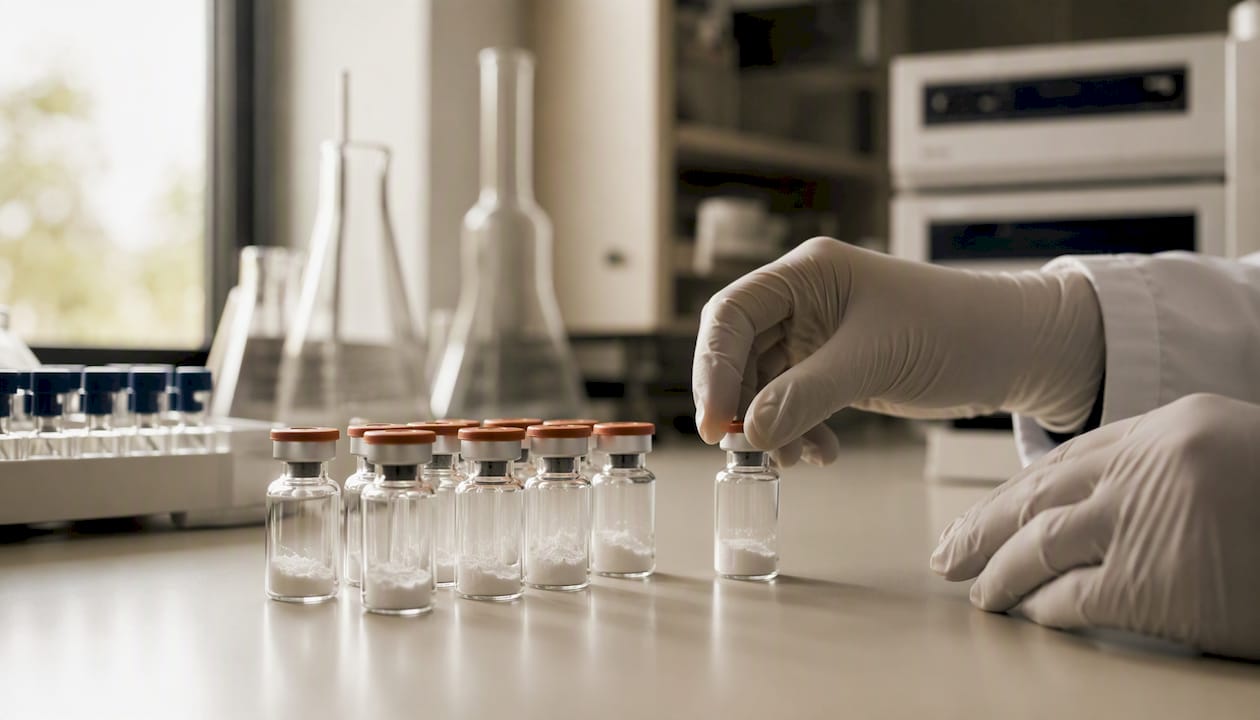
Lyophilized peptides stored sealed at −20 °C remain analytically stable for years. Reconstituted solutions are a different matter: refrigerated beyond-use dates (BUDs) of approximately 28 days apply when bacteriostatic water is the solvent, and that window shrinks considerably with non-preserved solvents. The printed expiry on a supplier’s Certificate of Analysis (COA) governs unopened lyophilized stock; once you reconstitute, BUD math takes over. Never assume one replaces the other.
Storage states and realistic shelf-life windows at a glance:
- Lyophilized, −80 °C or −20 °C (sealed): 1–5+ years, depending on sequence and COA expiry
- Lyophilized, 2–8 °C (refrigerator): months, acceptable for short-term holding
- Lyophilized, room temperature: days to weeks only; transit or immediate use
- Reconstituted, refrigerated (2–8 °C, bacteriostatic water): approximately 28 days BUD
- Reconstituted, aliquoted and frozen (−20 °C or −80 °C): months, with minimal freeze–thaw cycles
On receipt, do three things immediately: inspect the shipment against the lot-specific COA, log the lot number into your LIMS, and transfer the vial to the correct storage temperature before anything else.
Key Takeaways
Lyophilized peptides stored sealed at −20 °C remain analytically stable for years; reconstituted solutions carry a ~28-day refrigerated BUD when bacteriostatic water is used, and every lot decision should be anchored to the supplier’s COA.
| Point | Details |
|---|---|
| Lyophilized storage temperature | Store sealed lyophilized peptides at −20 °C or colder; avoid frost-free freezers. |
| Reconstituted BUD | Apply a ~28-day refrigerated BUD when bacteriostatic water is the solvent; shorter for non-preserved solvents. |
| COA expiry governs | The manufacturer’s COA expiry overrides rule-of-thumb BUD calculations for unopened stock. |
| Aliquot to protect integrity | Divide reconstituted solutions into single-use cryovials immediately; never refreeze a thawed aliquot. |
| Agateresearch lot documentation | Agateresearch provides lot-specific COAs, RP-HPLC chromatograms, and MS confirmation to anchor in-house QC baselines. |
Table of Contents
- Why storage conditions control peptide shelf life
- How to store lyophilized peptides for maximum stability
- Reconstituted peptide solutions: BUD conventions and aliquoting
- Lab workflow checklist: from receipt to storage
- Chemical and physical degradation pathways and how to mitigate them
- How to inspect peptide integrity and decide when to discard
- Quick reference: stability chart and cold-room checklist
- How Agateresearch supports stability decisions with COAs and lot traceability
- Agateresearch: research-grade peptides with full analytical documentation
- Sources
Why storage conditions control peptide shelf life
Chemical degradation and microbiological contamination are the two mechanisms that end a peptide’s analytical usefulness, and storage conditions determine which one wins. Hydrolysis, oxidation, deamidation, and aggregation are the dominant chemical routes; microbial growth becomes the controlling factor once a vial is opened and exposed to aqueous solvent.
Lyophilization suppresses hydrolysis almost entirely by removing residual water to very low levels. The moment you add solvent, you restart every aqueous degradation pathway simultaneously. That is why lyophilized powder stored at −20 °C can remain stable for years, while a reconstituted solution in the same freezer degrades measurably faster.
Environmental factors ranked by typical impact in a research lab:
- Temperature — the single largest lever; every 10 °C rise roughly doubles reaction rates
- Moisture — contamination with moisture greatly decreases long-term stability of lyophilized stock
- Oxygen — drives oxidation of Cys, Met, and Trp residues
- Light — accelerates Trp and Tyr photodegradation; amber vials or foil wrapping mitigate this
- Freeze–thaw cycling — each cycle stresses the peptide physically and chemically
Pro Tip: Label every vial with the reconstitution or opening date the moment you handle it, and link that entry to the lot COA in your LIMS. Reconstructing a timeline from memory after the fact is how labs lose traceability during audits.
How to store lyophilized peptides for maximum stability
For long-term storage, −20 °C is the standard minimum; −80 °C adds a margin for sequences with known oxidation-sensitive residues or for stock you will not touch for more than a year. A refrigerator at 2–8 °C is acceptable for holding periods of several months when freezer space is limited. Room temperature is appropriate only for transit or same-day use.
Practical handling rules before and after opening:
-
Allow the sealed vial to equilibrate to room temperature before opening. Cold glass pulled from a freezer accumulates condensation the instant it contacts lab air, and that moisture drives directly into the powder.
-
Open in a low-humidity environment; a desiccator or a glove box with dry inert gas is ideal.
-
Minimize headspace after each use; reseal under dry nitrogen or argon when available.
-
Keep vials upright and grouped by lot so COA cross-referencing is fast.
Freezer selection matters. Avoid frost-free freezers for long-term peptide storage. Automatic defrost cycles create temperature fluctuations that stress lyophilized material even when the average temperature reads −20 °C. A manual-defrost chest freezer or a dedicated laboratory ultra-low freezer is the correct choice.
| Storage condition | Realistic shelf-life range | Notes |
|---|---|---|
| Lyophilized, −80 °C (sealed) | 2–5+ years | Best for oxidation-sensitive sequences |
| Lyophilized, −20 °C (sealed) | 1–5+ years | Standard long-term; COA expiry governs |
| Lyophilized, 2–8 °C | Months | Acceptable short-term hold; avoid repeated opening |
| Lyophilized, room temperature | Days to weeks | Transit or immediate use only |
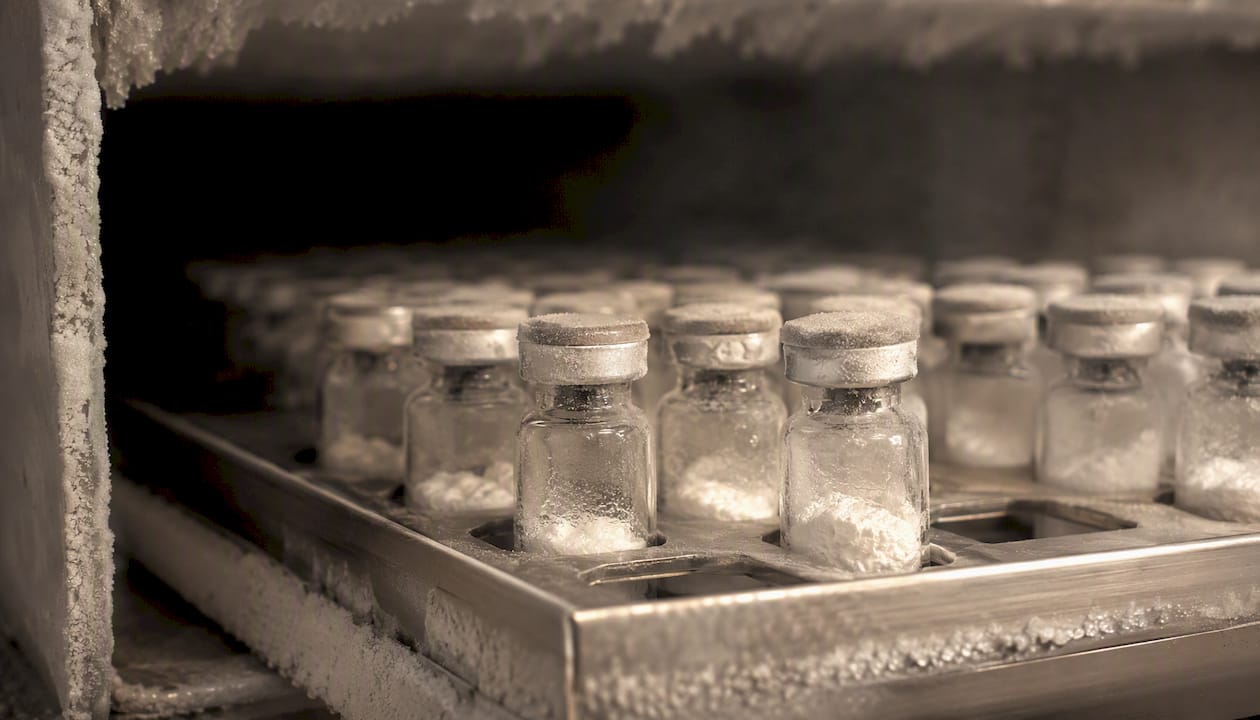
The manufacturer’s COA expiry date overrides these rule-of-thumb ranges. If the COA states an earlier date, that date controls.
Document storage location in your LIMS at the time of receipt: freezer ID, shelf position, lot number, and COA file path. A vial without a traceable storage record is analytically unverifiable regardless of how well it was kept.
Reconstituted peptide solutions: BUD conventions and aliquoting
Once you add solvent, the clock starts. A refrigerated BUD of approximately 28 days is the standard conservative default after reconstitution in bacteriostatic water, and that window is driven by sterility considerations tied to the benzyl alcohol preservative in bacteriostatic water, not by the peptide molecule’s intrinsic chemical stability. Bacteriostatic water multi-dose vials carry a discard guidance of around four weeks after puncture; labs adopt a similar window for reconstituted peptide solutions as the sterility limit.
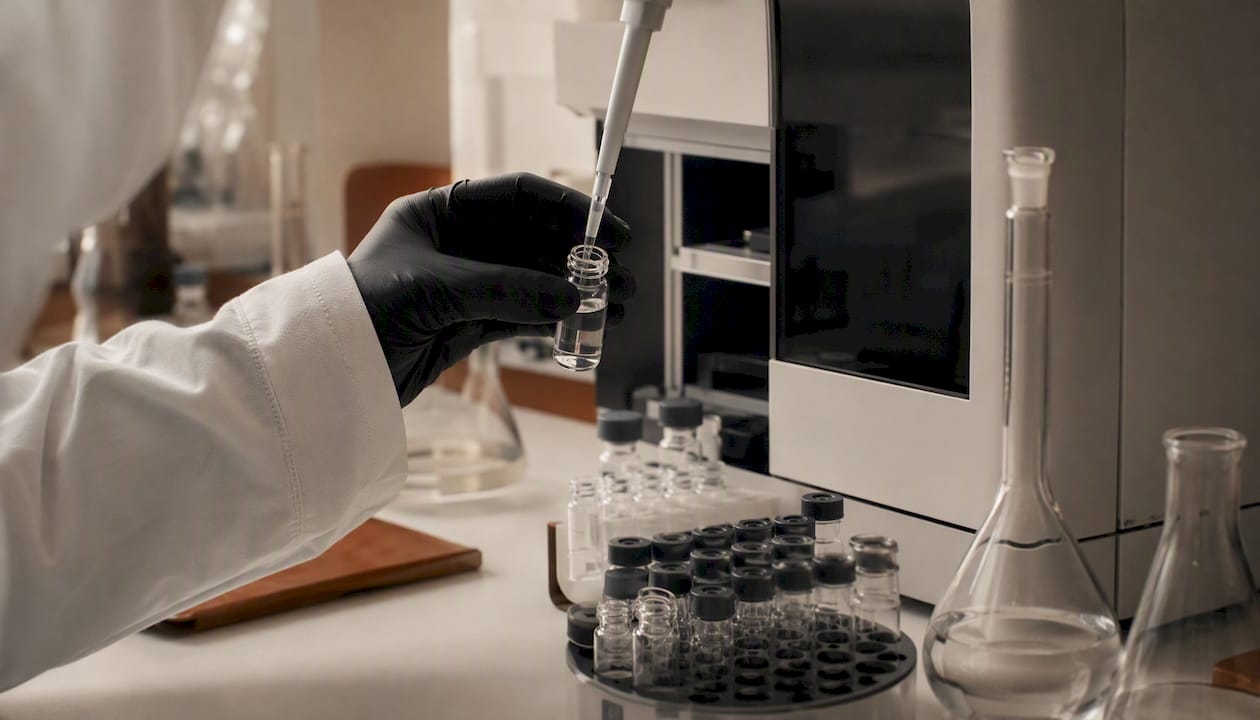
Non-preserved solvents (sterile water, phosphate-buffered saline, acetonitrile/water mixtures) shorten the effective window further because there is no antimicrobial preservative present. For those systems, a 7–14 day refrigerated BUD is a more defensible default, though sequence-specific stability data from the COA or supplier should take precedence when available.
Aliquoting workflow:
- Immediately after reconstitution, divide into single-use cryovials sized to one experimental run.
- Label each cryovial with: peptide name, lot number, concentration, solvent, reconstitution date, and BUD.
- Freeze aliquots at −20 °C for routine storage or −80 °C for sequences with known instability.
- Thaw only what you need; never refreeze a thawed aliquot.
Solvent selection notes:
- Bacteriostatic water: appropriate for aqueous-soluble sequences; sets the ~28-day BUD clock.
- Sterile water: no preservative; shorter effective window; use when benzyl alcohol would interfere with the assay.
- DMSO or DMF: necessary for hydrophobic sequences that will not dissolve in aqueous solvents. Add a small volume of DMSO first to wet the powder, then dilute with aqueous buffer. Avoid storing high-DMSO solutions long-term; DMSO accelerates oxidation of susceptible residues and can degrade container seals over time.
- pH-controlled buffers: sequences prone to hydrolysis (Asp-Pro bonds in particular) benefit from neutral to slightly basic pH during storage.
Pro Tip: A single freeze–thaw cycle is generally tolerable for most peptide solutions, but plan your aliquot size so that a second cycle is never necessary. If you find yourself refreezing regularly, your aliquot volume is too large.
Lab workflow checklist: from receipt to storage
A consistent workflow at the bench is what keeps COA-linked traceability intact across the full sample lifecycle.
On receipt:
- Inspect packaging for temperature excursions (check cold pack status, note any damage).
- Verify lot number on vial label against the COA.
- Log lot number, COA file, storage temperature, and receipt date into LIMS.
- Transfer immediately to the correct storage location (freezer, refrigerator, or desiccator).
Before opening a lyophilized vial:
- Remove from freezer and allow to reach room temperature, sealed, before opening (typically 30–60 minutes depending on vial size).
- Confirm the vial is dry and the powder appears intact before proceeding.
- Weigh on an analytical balance in a low-humidity environment; use a desiccant-lined weighing chamber if available.
Reconstitution and labeling:
- Select solvent based on sequence polarity and assay requirements.
- Record solvent identity, volume added, resulting concentration, and reconstitution date on the vial and in LIMS.
- Calculate and record BUD (reconstitution date + applicable window).
- Link the reconstitution record to the COA and HPLC/MS reports in LIMS.
Aliquoting and return to storage:
- Aliquot immediately into pre-labeled cryovials.
- Freeze aliquots promptly; do not leave reconstituted solution at room temperature longer than necessary.
- Store COA printout or digital file with the lot entry; never rely on memory for lot-specific purity data.
Bench essentials: desiccant packs, dry nitrogen or argon source, analytical balance, cryovials, permanent marker, and a printed COA for each active lot.
Chemical and physical degradation pathways and how to mitigate them
The dominant degradation mechanisms in peptide samples are hydrolysis, oxidation, deamidation, and aggregation. Temperature accelerates all four; aqueous solvent is required for hydrolysis and microbial growth; oxygen drives oxidation; and repeated freeze–thaw cycles promote aggregation through ice-crystal mechanical stress.
Sequence-specific vulnerabilities:
- Cysteine (Cys): highly susceptible to oxidation; forms disulfide bonds or sulfenic acid derivatives under aerobic conditions.
- Methionine (Met): oxidizes to methionine sulfoxide; even trace dissolved oxygen is sufficient.
- Tryptophan (Trp): oxidizes and photolyzes; amber vials and light exclusion are non-negotiable for Trp-containing sequences.
- Asparagine/Glutamine (Asn/Gln): deamidation converts these to Asp/Glu, shifting mass by +0.984 Da and altering charge state.
- Phosphorylated residues: generally stable in storage but sensitive to phosphatase contamination in non-sterile solutions.
- C-terminal amidation: improves resistance to carboxypeptidase-type degradation and can extend solution stability modestly.
Mitigation steps:
- Minimize headspace in storage vials; flush with nitrogen or argon before sealing.
- Use amber or foil-wrapped vials for light-sensitive sequences.
- Match buffer pH to the sequence’s stability optimum; avoid extremes that accelerate hydrolysis.
- Aliquot into single-use cryovials to eliminate repeated freeze–thaw exposure.
- Document any antioxidant or reducing agent additions (e.g., DTT for Cys-containing peptides) in the lot record, as these affect downstream assay interpretation.
Analytical verification is the only reliable way to detect chemical degradation that has no visual signature. RP-HPLC peak shifts (new peaks, reduced main-peak area) and MS mass changes (oxidation +16 Da, deamidation +0.984 Da) are the standard indicators. Aggregation appears as elevated baseline or early-eluting peaks in RP-HPLC and as high-mass species in native MS.
Pro Tip: Design a small set of stability QC samples at the start of any long-running study: aliquots stored under the same conditions as your working stock, pulled and analyzed by RP-HPLC at defined intervals. This gives you a degradation rate for your specific sequence under your specific conditions, which is far more informative than any general rule-of-thumb.
How to inspect peptide integrity and decide when to discard
Visual inspection is the first filter, not the last. Discard immediately on any of the following:
- Cloudiness or turbidity in a solution that was previously clear
- Visible particulate matter (flakes, strands, precipitate)
- Color change (yellowing, browning) in a peptide that was colorless or white
- Gelation or unusual viscosity increase
These are unambiguous discard triggers. Do not attempt to filter and continue; the chemical integrity of the sample is already compromised.
Invisible degradation is the harder problem. Chemical degradation can occur without any visual cues and requires HPLC or MS to detect. A practical decision rule:
- At BUD: discard unless you have analytical data confirming purity is within acceptable tolerance of the COA baseline.
- Before BUD, with visual changes: discard immediately.
- Before BUD, no visual changes, critical assay: run RP-HPLC and compare main-peak area to COA value; set an in-house acceptance criterion (e.g., purity must remain within 2% of COA-stated value).
- After any freeze–thaw beyond your planned cycle count: run MS to confirm molecular weight is unchanged before using the sample in a quantitative assay.
Each freeze–thaw cycle can cause measurable potency loss in reconstituted peptide solutions, which is why aliquoting into single-use volumes is the standard mitigation rather than repeated freezing of a bulk vial.
Quick reference: stability chart and cold-room checklist
COA expiry overrides all rule-of-thumb windows. Sequence-specific guidance from the supplier may be tighter than these defaults.
Cold-room door checklist:
- Is the lot number on the vial label? Does it match the COA?
- Is the storage temperature correct for this peptide state (lyophilized vs. reconstituted)?
- Is the reconstitution date and BUD written on the vial?
- Is the COA linked in LIMS to this lot entry?
- Has the vial exceeded its BUD or the COA expiry, whichever is earlier?
- Are there any visual changes (cloudiness, color, particulate)? If yes, discard.
- Has this aliquot been frozen and thawed more than once? If yes, run QC before use.
How Agateresearch supports stability decisions with COAs and lot traceability
These documents are not generic batch summaries; they are tied to the exact lot in your freezer, which means you have a verified analytical baseline for that specific material.
Documents researchers receive and how to use them:
- Lot-specific COA: records purity, identity, lot number, and supplier-stated storage conditions. This is the primary document for release-to-use decisions and the anchor for all storage records.
- RP-HPLC chromatogram: provides the main-peak retention time and area percentage at the time of manufacture. Use this as your in-house QC baseline; any future RP-HPLC run on the same lot should be compared against this value.
- Mass spectrometry confirmation: verifies molecular weight and rules out gross structural errors. Retain this alongside the HPLC report in your LIMS entry for the lot.
Recommended recordkeeping:
- Scan or digitally file the COA and analytical reports at the time of receipt; attach to the LIMS lot entry.
- Record the storage location (freezer ID, shelf, position) in the same LIMS entry.
- Log every reconstitution event: date, solvent, volume, concentration, BUD, and analyst initials.
- Maintain a chain-of-custody log for each lot covering receipt, storage transfers, reconstitution events, and final discard date.
Pro Tip: Use the COA’s RP-HPLC purity value as your in-house QC acceptance floor. This converts a supplier document into an active QC instrument rather than a filing formality.
The COA expiry date stated by Agateresearch for unopened lyophilized stock takes precedence over any arithmetic BUD calculation. If the COA expiry falls before your calculated BUD, the COA date controls.
Agateresearch: research-grade peptides with full analytical documentation
Every order ships with a lot-specific COA that gives your lab a documented analytical baseline from day one, which is exactly what you need to make defensible storage and release-to-use decisions.
Lot-specific analytical documentation is not a formality. It is the foundation of any stability decision: without a verified purity baseline tied to a specific lot, you cannot determine whether a purity shift detected months later represents degradation or was present at manufacture. Agateresearch’s chain-of-custody documentation and HPLC/MS reports are structured to integrate directly into LIMS-based storage logs and stability audit trails.
To view the current catalog or request lot documentation for a specific compound, visit Agateresearch.
Sources
The following references support the storage guidance, BUD conventions, and analytical recommendations in this article. Consult your supplier’s COA and stated storage instructions first; use these sources for broader protocol context.
- NIBSC - Peptide Storage
- How Long Does a Reconstituted Peptide Last? | InjectBuddy
- How to Store Peptides: Shelf Life, Fridge vs. Freezer & the 30-Day Myth (Peppal)